
There’s a special kind of beauty in fabrics that don’t demand attention — but reward you when you look closer. Low-volume fabrics fall squarely into that category. They’re soft, subtle, and often overlooked… until you see what they can do to support the overall design of a quilt.
If you’ve ever wondered how to add texture, depth, and a touch of sparkle without overwhelming your design, low-volume fabrics might be exactly what you’re looking for.
What are Low-Volume Fabrics?
At first glance, low-volume fabrics often read as “backgrounds.” But they’re much more nuanced than a simple tone-on-tone print.
Typically, low-volume fabrics are:
- Light in value (think whites, creams, pale grays, soft beiges)
- Printed with subtle designs rather than bold motifs
- Designed to blend at a distance, but reveal detail up close
Common prints include:
- Tiny florals
- Scattered dots or specks
- Script or text
- Faint geometrics
- Delicate line work
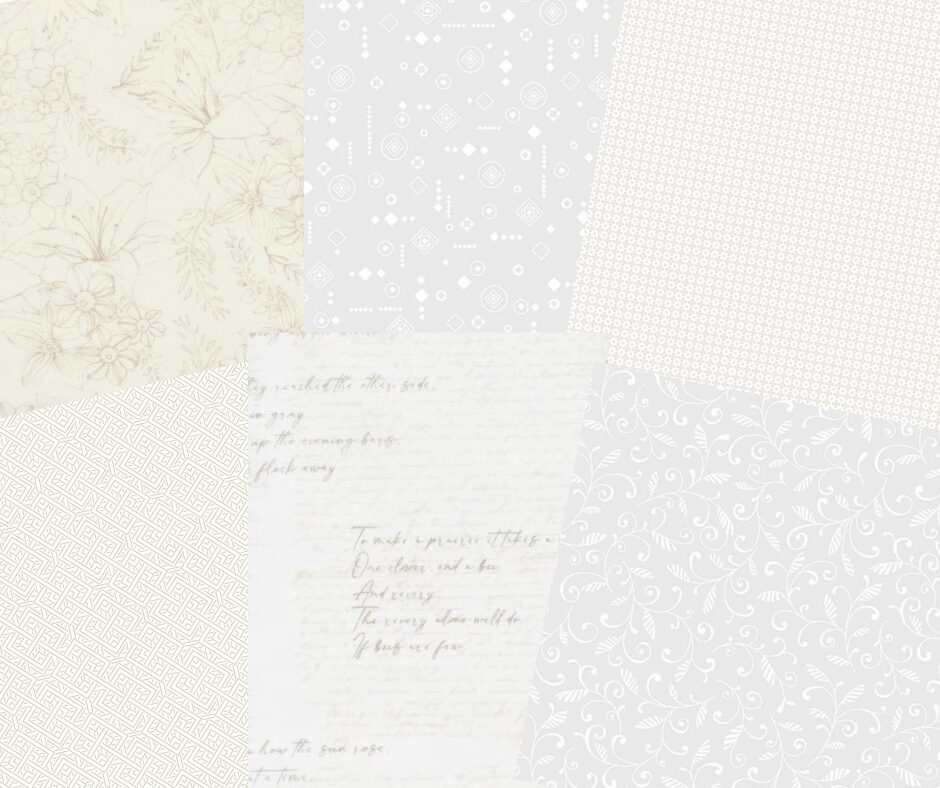
From across the room, they read as a quiet, unified background. Up close, they’re full of personality.
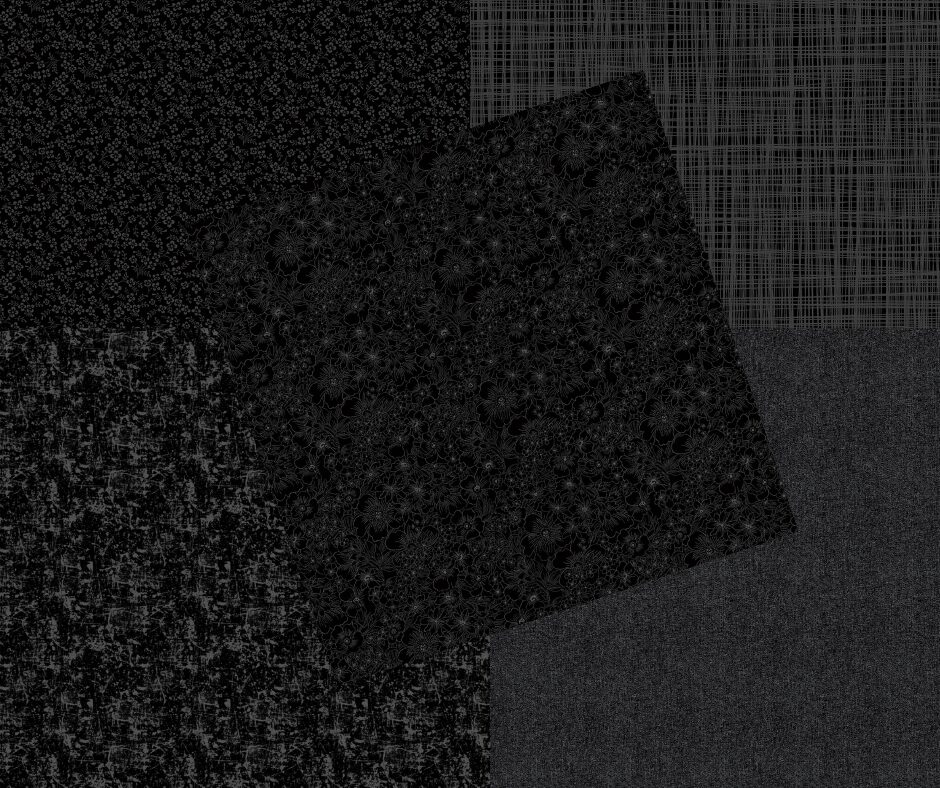
Now that I’ve said the most low volume-fabrics are light in color, I’m going to tell you that I like to use very dark low-volume fabrics (like black) in exactly the same way. I love making quilts with black backgrounds – they make the bolder foreground colors really “pop”. Here’s an example of a grouping of black low-volume fabrics that I would use:
Why Use Low-Volume Fabrics?
1. They Add Texture Without Bulk
Instead of a flat, solid background, low-volume fabrics create a layered look. The variation between prints adds visual texture, and depth — without introducing heavy contrast.
2. They Create Movement and Depth
When you use a mix of low-volume prints, your eye gently travels across the quilt. This creates a sense of movement that keeps the design feeling alive.
3. They Let Your Feature Fabrics Shine
Low-volume fabrics act as a supporting cast. They enhance bold colors, intricate piecing, or statement blocks without competing for attention.
4. They Add That Subtle “Sparkle”
This is where the magic happens. A hint of metallic, a whisper of text, a barely-there print—these details catch the light and give your quilt an almost luminous quality.
It’s not sparkle in the glittery sense. It’s quieter. Softer and often more sophisticated.
How to Use Low-Volume Fabrics in Your Quilts
As a Background (With a Twist)
Instead of using a single background fabric, try piecing your background from multiple low-volume prints. This works beautifully in:
- Modern quilt designs
- Scrappy quilts
- Negative space layouts
It keeps the background interesting without distracting from the main design.
To Soften Bold Color Palettes
If your quilt includes strong or saturated colors, low-volume fabrics can act as a visual resting place. They help balance the intensity and keep the overall design from feeling too heavy.
As a Design Element (Not Just a Background)
Low-volume fabrics don’t have to stay in the background. They create a cohesive, understated design all their own. Try using them:
- Inside blocks for contrast (See example below)
- In strip piecing or log cabin variations
- As alternating elements in a repeating pattern
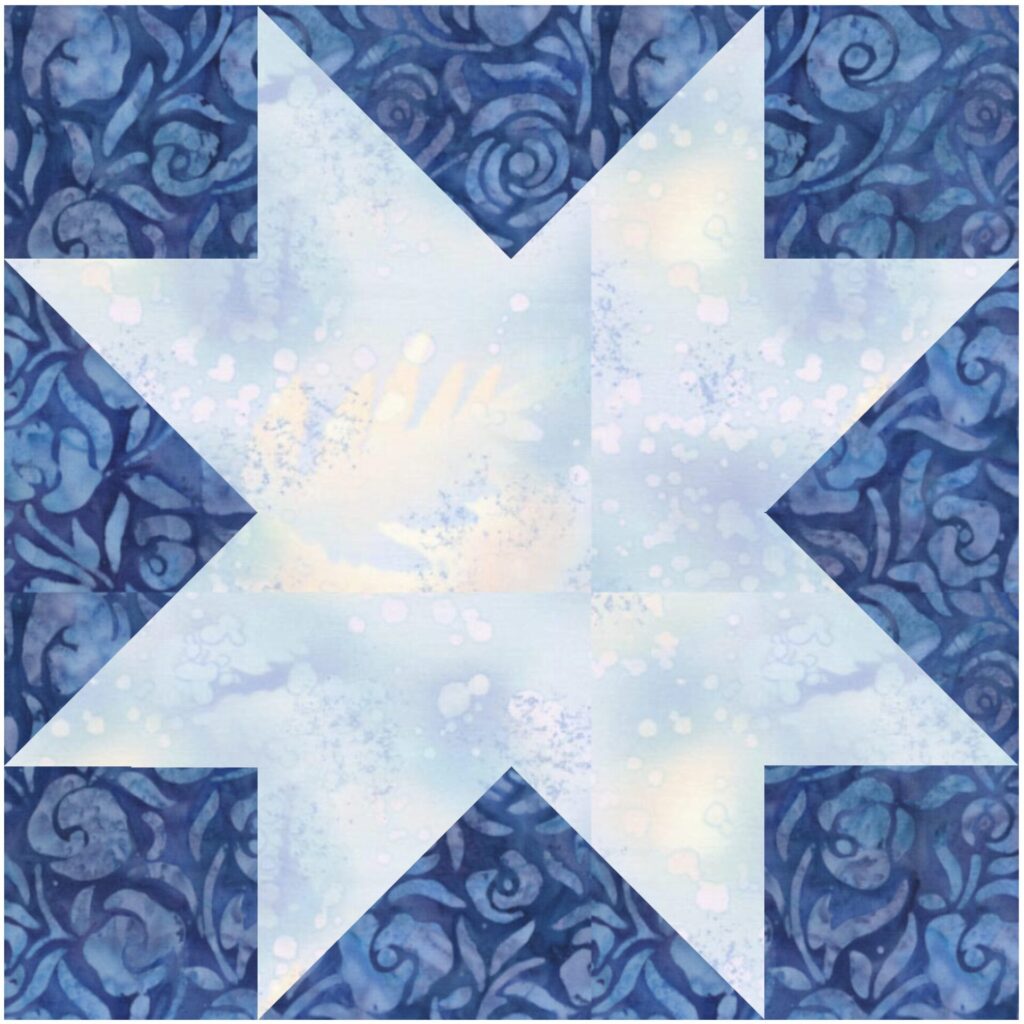
shines in this star block
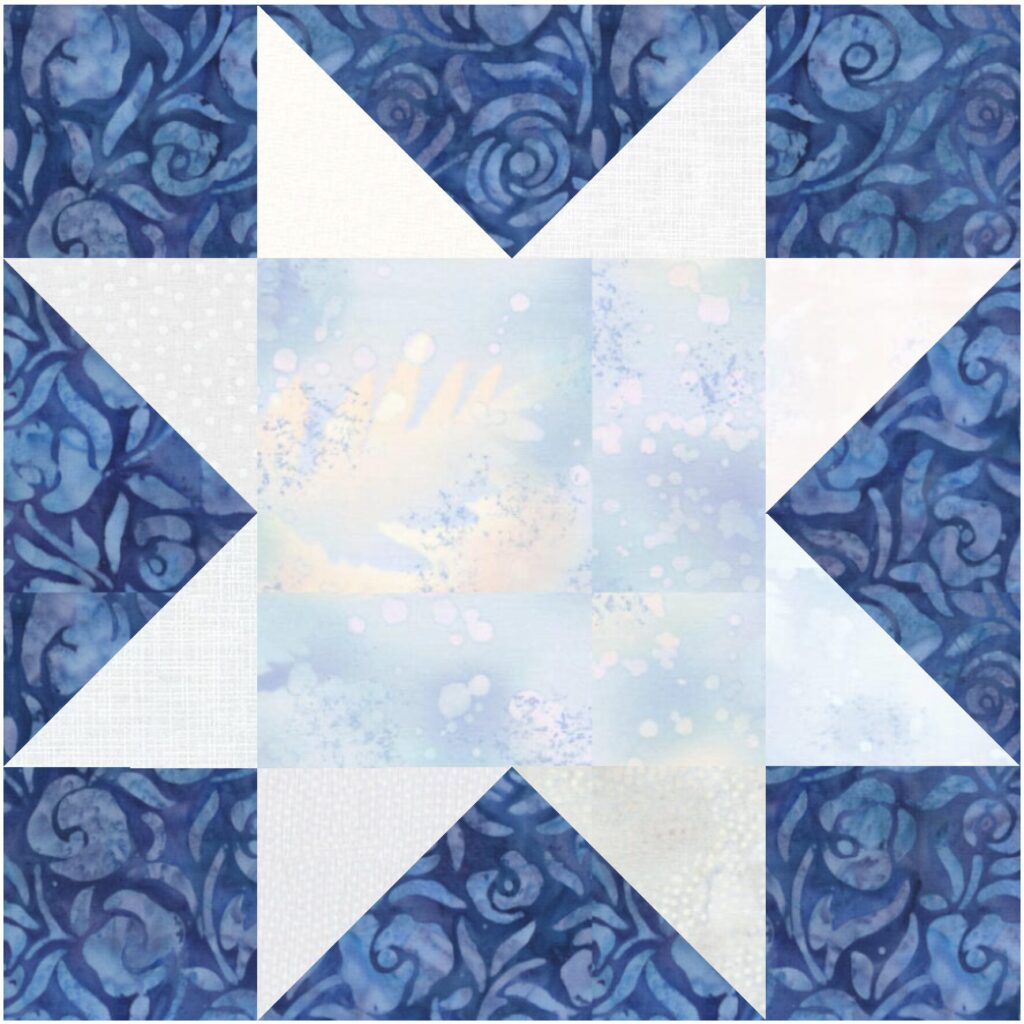
To Create Contrast Without High Drama
The quilts I make generally lean more high-contrast, however, not every quilt needs high contrast. Sometimes the most successful design is much more subtle. Low-volume fabrics allow you to create separation between elements in a gentler way—perfect for softer, more understated quilt designs.
Building Your Low-Volume Fabric Collection
On your next trip to the quilt shop, make a point of seeking out the low-volume fabrics, they are incredibly fun to collect — and a little addictive once you start noticing them.
Look for Variety in:
- Print scale (tiny to slightly larger subtle prints)
- Color undertones (warm creams vs. cool grays)
- Design styles (organic vs. geometric vs. text)
Don’t Be Afraid of “Almost Low-Volume”
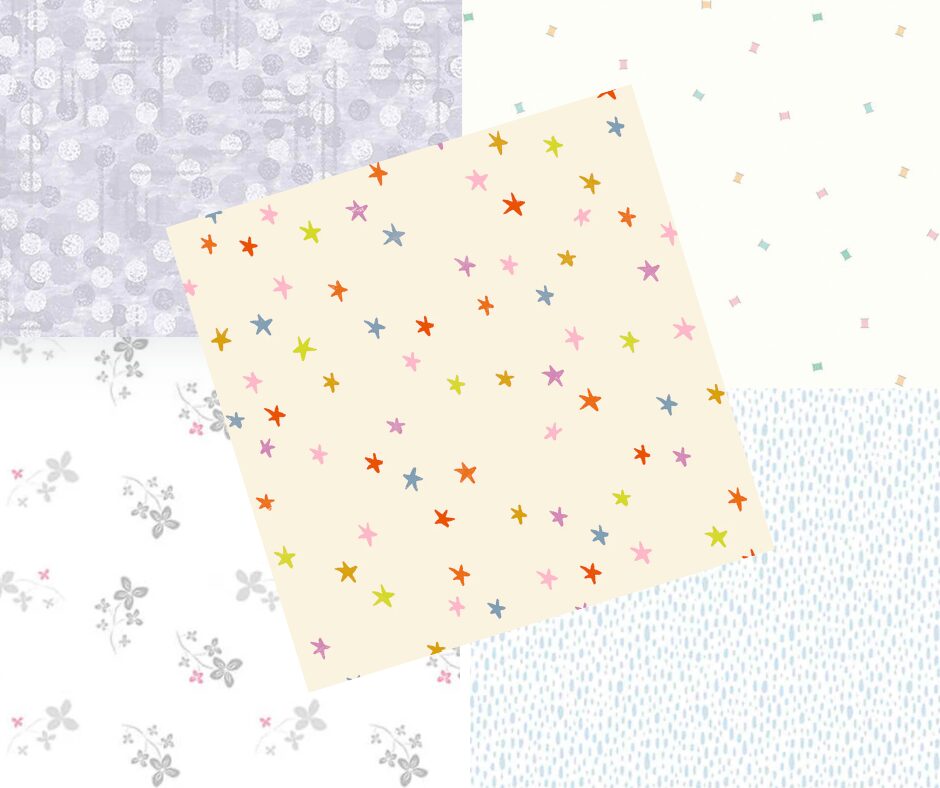
Some fabrics live right on the edge — slightly darker prints or a bit more contrast. They could even include a tiny bit of color. These can add depth when mixed thoughtfully into your low-volume palette. Here are some examples of “almost” low-volume fabrics to give you an idea of what I mean:
Keep a Dedicated Bin or Scrap System
Having a go-to collection makes it much easier to experiment. Even small scraps can be incredibly useful in low-volume work. I have a separate storage bin – just for these magical fabrics.
A Few Practical Tips
- Audition from a distance: Step back and see how your fabrics read together. Low-volume is all about the collective effect.
- Watch your contrast levels: Too little variation can look flat—too much can lose the “low-volume” feel.
- Mix instead of match: Variety is what creates that rich, textured look.
- Test in small sections first: A block or two can help you find the right balance before committing to a full quilt.
Letting the Quiet Fabrics Speak
Low-volume fabrics may not be the stars of the show — but they’re often what make the whole quilt work. They bring balance, texture, and that elusive sense of cohesion that pulls everything together. And once you start using them with intention, you may find they become one of the most powerful tools in your quilting toolkit.
Next time you’re choosing fabrics for a quilt, set aside your boldest prints for a moment — and take a closer look at the quiet ones.
Pull a handful of low-volume fabrics from your stash and experiment with how they work together. You might be surprised at how much interest — and yes, even sparkle — they can bring to your next project.
Happy Stitching!