
In the last newsletter, I asked readers to share their experiences with rotary blade sharpeners. I presented several versions as options to consider and asked for opinions on those, as well as any other rotary blade sharpeners they may have experience with.
I wanted to know if any were working well and what made them work well for the task. On the flip side of that same question, I wanted to know which ones didn’t perform as well as we quilters hoped they would. Please note: We are only considering sharpeners for straight-edge rotary blades. Rotary blades with fluted or pinked edges are a whole ‘nother thing.
What’s my goal in all this?
Here’s the thing: I have not offered a rotary blade sharpener in my shop because there are so many options available, and I only add products to the store that I am very comfortable recommending to you. While I have tried a couple – and use one regularly, I haven’t tried them all. That’s where I decided to turn to newsletter readers for some help deciding which ones performed the best for the most people.
My goodness, so many opinions (and more than a little frustration). Thank you!! I offered five options by four different companies for you to consider. They were:
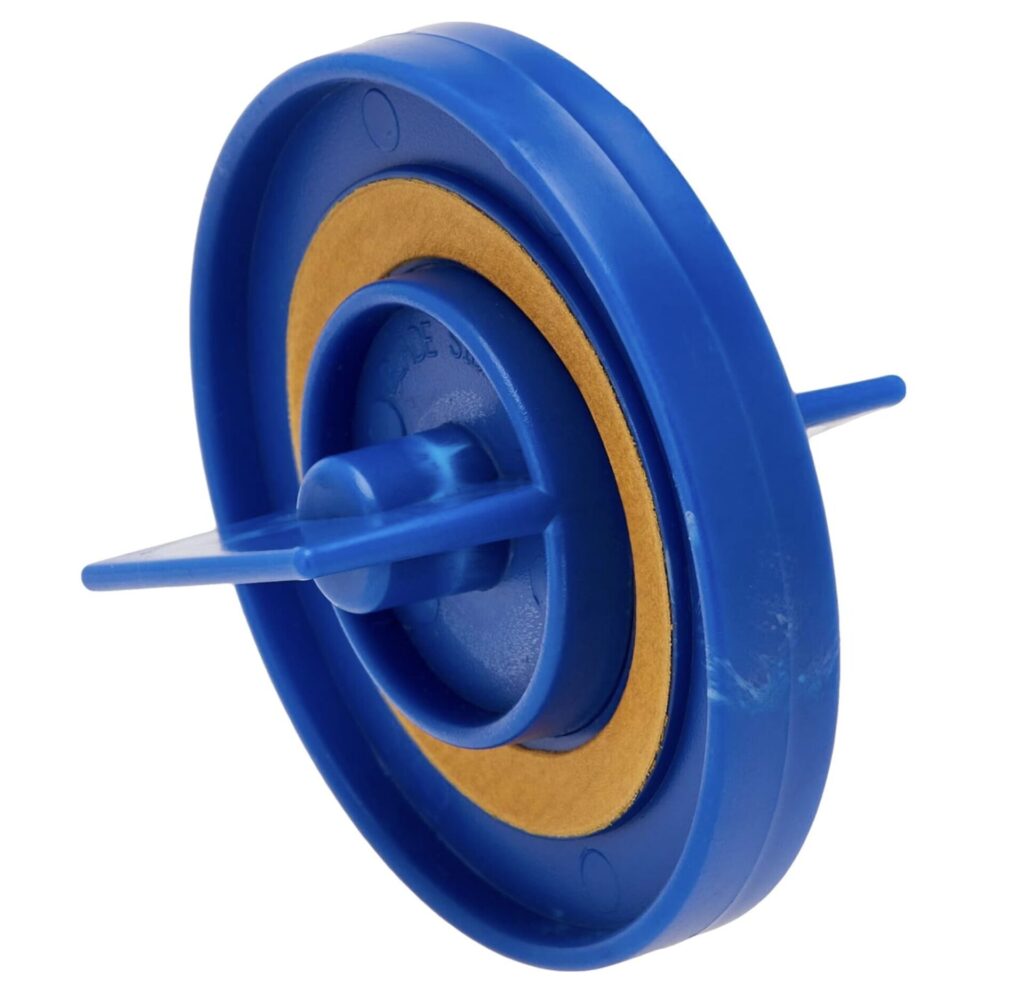

Rotary Blade Sharpener
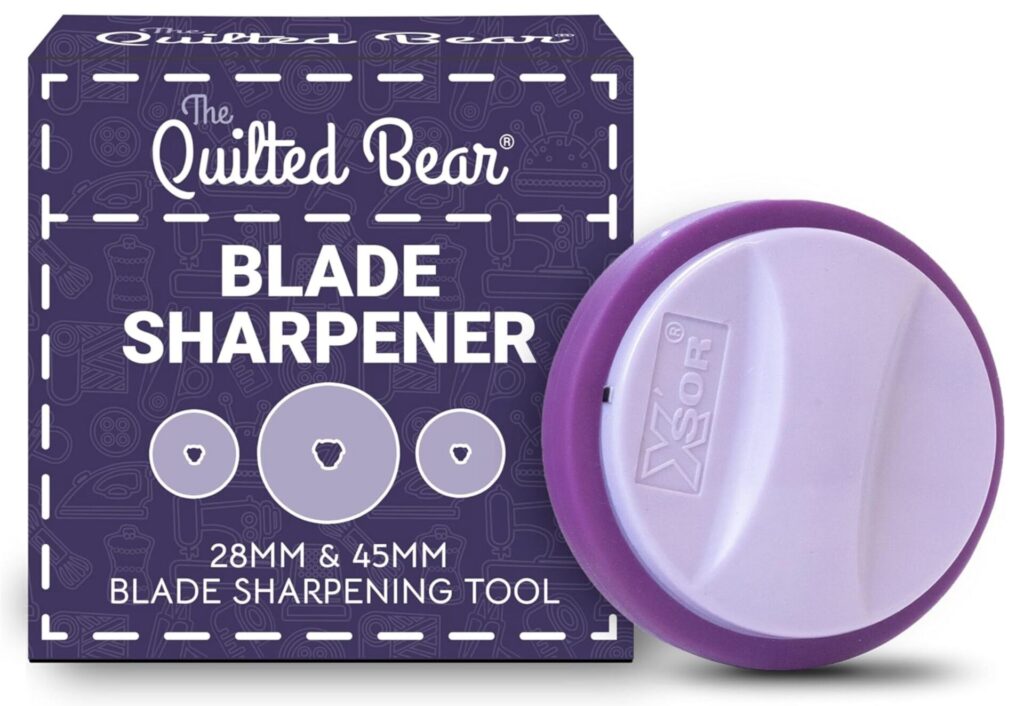
Rotary Blade Sharpener
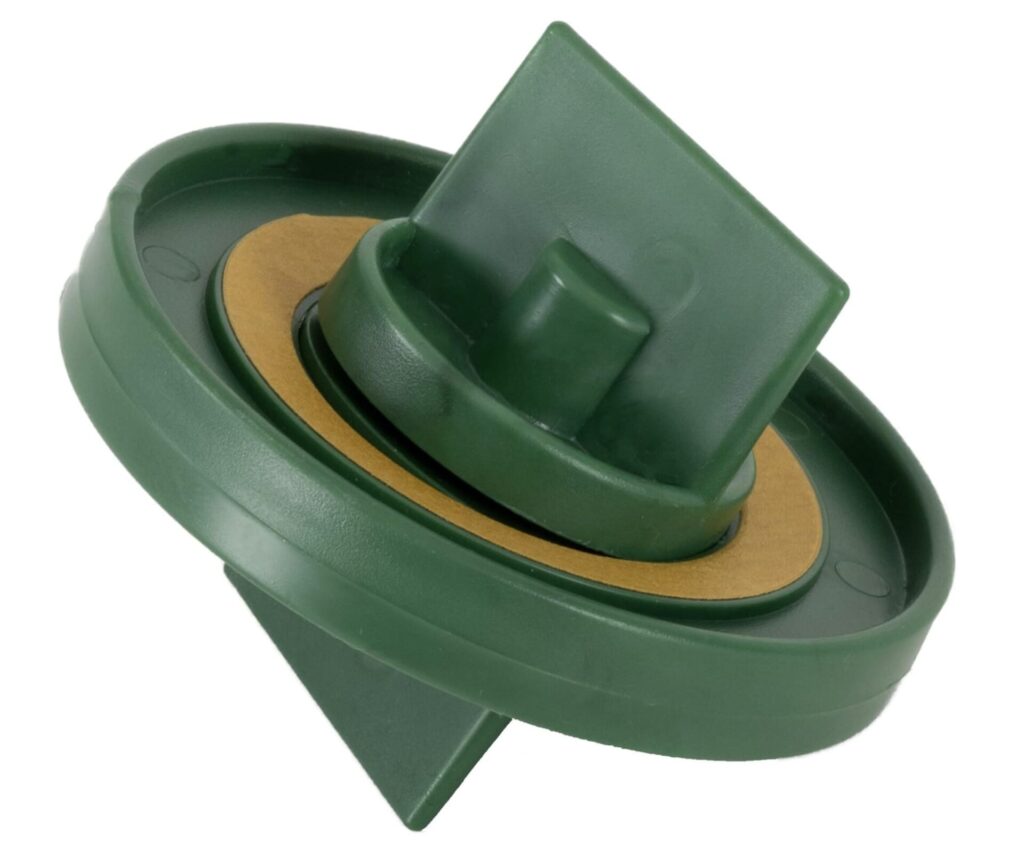
Here’s What I heard from those of you who responded to the survey:
Colonial Needle and OmniGrid Versions: Most who responded have purchased or at least tried one or the other of these very similar rotary blade sharpeners, with mixed results. On the plus side, they are relatively inexpensive and don’t take up much room. They do an adequate job of sharpening the blade – if the manufacturer’s instructions are followed exactly – and the blade isn’t too far gone when we decide to try sharpening it. These both work for 45mm blades (from a variety of manufacturers) but not for other size blades. They both make sharpeners for other size rotary blades, so that’s an option if you regularly use other sizes (28mm or 60mm). These are generally priced around $20.00 – $30.00. You would need to purchase a sharpener for each size blade you regularly use.
TrueCut Linear Rotary Blade Sharpener: This is the only version offered where it’s not necessary to remove the blade from the rotary cutter in order to sharpen it. It’s designed more like a knife sharpener, and it works with any size blade from any manufacturer. This option is a little more of an investment ($40.00) than some of the other rotary blade sharpener options, but it works well if the manufacturer’s instructions are followed.
Quilted Bear Rotary Blade Sharpener: Not as many people have used this sharpener, so there weren’t many opinions to consider. It is designed in a very similar way to the Colonial Needle and OmniGrid options, except that the blade goes into a completely closed case. The blade is sharpened by rolling the case on a hard surface. The internal workings of the blade sharpener are essentially the same. It’s fairly inexpensive ($18.00 – $25.00). The sharpener works for most 28mm and 45mm rotary blades. While it is compatible with rotary blades from many manufacturers, it is not compatible with rotary blades from either Fiskars or Clover.
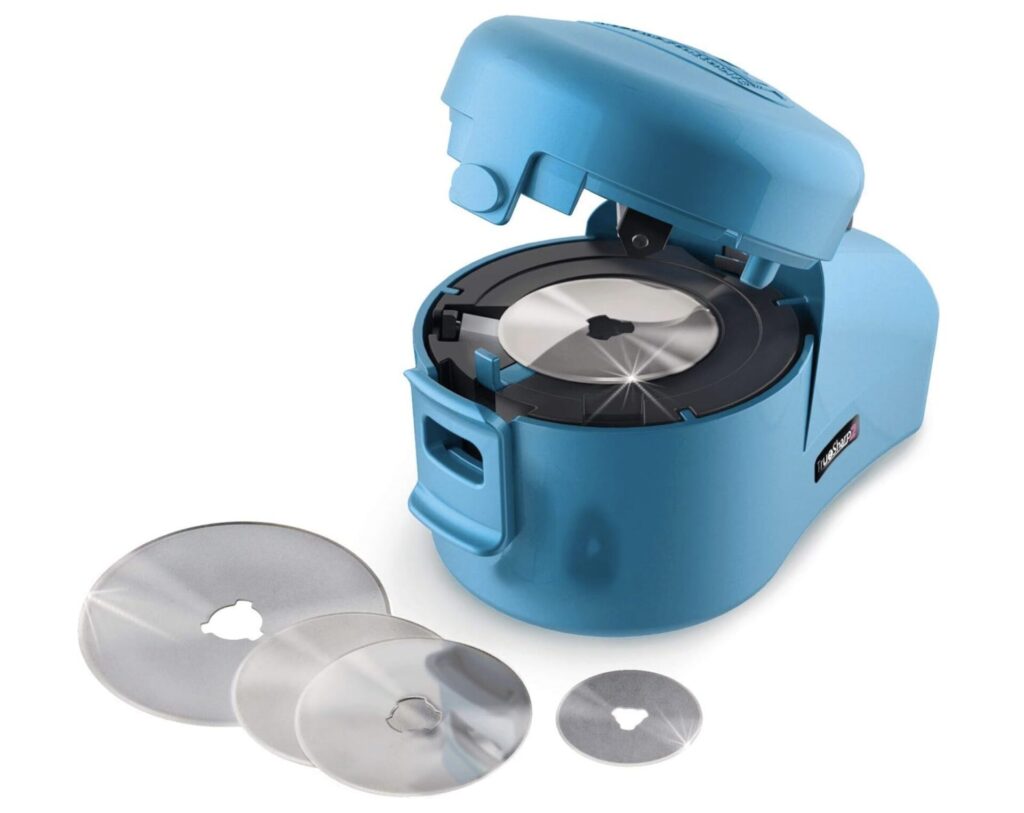
TrueCut Rotary Blade Sharpener: Like the Linear Sharpener – this sharpener is from The Grace Company. This option works for multiple sizes of rotary blades and sharpens them with the push of a button. While it is compatible with the blades from most manufacturers, it is not compatible with either Fiskars or Clover rotary blades. This rotary blade sharpener works well, sharpening the blades quickly. It is the most expensive ($60.00+) of the rotary sharpeners we considered, but it could be worth the investment if you want ease of use and need to sharpen lots of rotary blades.
Tips to Make Blade Sharpening Easy and Effective:
Much of the frustration expressed about using any rotary blade sharpener can be traced to not using it correctly or often enough. I can certainly relate to this – I have dived right in to sharpening without really following the directions – and been frustrated with the results. Turns out, the instructions are important.
[1] Sharpen early and often: Don’t wait until the blade starts giving you trouble to decide to sharpen it. Sharpening blades correctly – and regularly can extend the life of your blade. Just as a reminder, the same is true for your sewing machine needle – change it often for much easier stitching (and much less frustration).
[2] Follow the manufacturer’s directions – exactly: All of these rotary blade sharpeners are offered by reputable companies with a great lineup of quality products. These all seem very intuitive to use – but looks can be deceiving. Not following the manufacturer’s directions can result in a blade that doesn’t get sharp at all – super frustrating if you are trying to make your work easier and replace your blades less often.
[3] Ergonomics: Some versions require inserting the blade and twisting it for quite a few rotations in order to sharpen the blade. If your hands aren’t up to the kind of repetitive motion, you might not use it as often as you should to extend your blade life.
[4] Choose a rotary blade sharpener that works for the brand (and size) of blades you typically use.
So … Which Rotary Blade Sharpeners will I add to the Quiltblox store?
Based on your feedback – and my own experience with it, I have selected the TrueCut Linear Rotary Blade Sharpener to add to the store. I made this decision for the following reasons:
Ease of Use: This rotary sharpener is the only version that allows the user to leave the blade in the rotary cutter during the sharpening process. It’s less work (and safer) because you don’t have to disassemble the rotary cutter, remove the blade, place it into a sharpener, and then repeat the process in reverse.
Compatibility: Because the blade stays in the rotary cutter, it does not need to fit a particular-shaped center hole/notch. That means that the sharpener will work with the blades from any and all manufacturers, and any size straight cut blade. Use your favorite rotary cutter, and leave the blade in place to sharpen it.
Value: As far as pricing, this option is in the middle pack and, over time will reduce the number of new blades that we need to purchase.
I hope you found this dive into rotary blade sharpeners helpful. Anything that can extend the life of our tools and improve our experience using them to do what we love is worth learning about.
Happy stitching!